In the competitive B2B SaaS landscape, paid search can be a powerful growth channel. But only if you optimize for pipeline quality, not just clicks and form fills.
Unlike B2C campaigns that often focus on quick conversions and broad reach, Google Ads for B2B SaaS requires a more nuanced setup to attract high-value leads and drive real ROI.
Poor performance is not caused by the budget or the ads themselves, but by low-quality data, misaligned targeting, and an unclear funnel structure.
Here are 5 tips on how to turn Google Ads into a predictable growth engine for B2B SaaS.
1. Connect Google Ads to your CRM
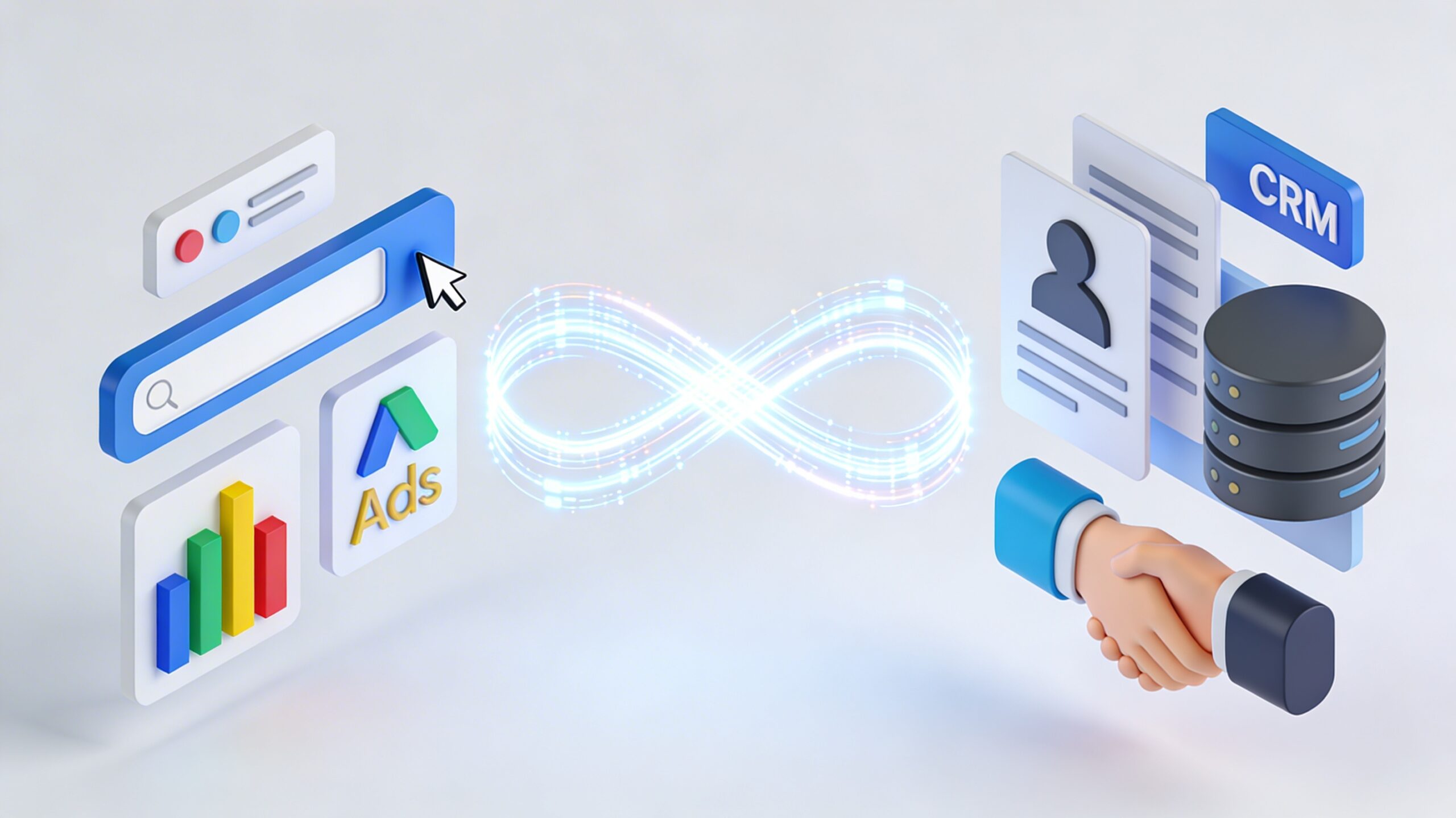
If B2B Google Ads are underperforming, the problem is rarely the ads alone. Paid Search Ads work best when you feed it high-quality data that reflects real revenue outcomes, not just in-platform engagement metrics like clicks or impressions.
Google Ads conversion tracking can tell you how many users submitted a demo form or downloaded a whitepaper, but it does not show whether sales actually qualified the lead or whether the deal eventually closed. That is where your CRM becomes essential.
A strong CRM and Google Ads setup has three parts:
- Lead attribution from click to lead, typically by passing the GCLID into a hidden form field and storing it in the CRM.
- Clear funnel definitions, so marketing and sales agree on when a lead becomes an MQL, SQL, or opportunity.
- Offline conversion imports, where SQLs or closed-won deals are sent back into Google Ads so the algorithm can optimize for revenue, not just form fills.
This shifts bidding away from people who simply complete a form and toward users who are more likely to become qualified pipeline. Before connecting both systems, make sure your legal and data protection review is in place, especially under GDPR.
2. Reduce wasted ad spend through ad copy
Many marketers write ad copy to maximize click-through rates. In B2B SaaS, that is often the wrong approach. Traffic quality matters more than traffic volume, because every click costs money and irrelevant clicks can become expensive fast.
A better approach is to use ad copy to pre-qualify the audience before they click. That means being more direct about price, company size, or use case so the wrong prospects self-select out.
For example, if your product is designed for mid-market or enterprise teams, you might say:
- “From €499/month”
- “Built for companies with 50+ employees”
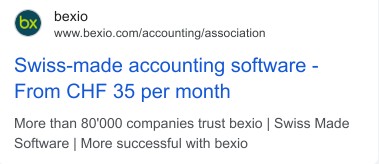
This strategy intentionally reduces click-through rate to prioritize lead quality. In B2B SaaS, having fewer leads is not a problem if those leads are much closer to your ideal customer profile.
3. Match landing pages to search intent
One of the most common mistakes in B2B Google Ads is sending people to the wrong landing page for their stage in the buying journey. If someone searches for “ERP implementation checklist,” they are still researching, and not ready to book a demo.
Your landing page should match the intent behind the query. For informational and research-stage searches, offer soft conversions such as:
- Whitepapers
- Checklists
- Templates
- Webinars
For decision-stage searches, offer hard conversions such as:
- Demo requests
- Trial signups
This funnel-based approach helps you capture demand earlier without forcing the wrong CTA too soon. It also allows you to nurture users gradually until they are ready for sales.
4. Use Google Ads targeting features properly
Most B2B SaaS accounts lose budget to irrelevant traffic, especially from small businesses, freelancers, or consumer search intent. That is why targeting and exclusion settings matter as much as keyword selection.
Start with negative keywords to filter out low-quality traffic. Common exclusions include:
- free, cheap, freeware, open source
- jobs, salary, internship, training
- personal or consumer-use terms
You can also use audience signals more strategically. In-market segments and custom intent audiences can help Google understand who is likely to buy, but they need to be used carefully. If you want to narrow traffic, use targeting rather than observation so your ads are shown only to the most relevant users.
Device and time-of-day targeting can also improve efficiency. In many B2B SaaS cases, research happens on desktop during business hours, not on mobile during a commute. If your CPL is too high, consider reducing mobile and tablet bids and limiting delivery to weekdays and working hours.
5. Go beyond search with Demand Gen and lead nurturing
At some point, every B2B SaaS Search campaign hits a ceiling. Transactional keyword volume is limited, competition increases CPCs, and you end up competing for a limited segment of buyers who are already in-market.
According to the B2B Institute, only 5% of potential buyers are “in-market” (ready to buy now), while 95% are “out-of-market” (will buy later).
To scale further, you need to move beyond demand capture and invest in demand generation. Google Demand Gen campaigns are a strong option for B2B SaaS because they let you reach potential buyers across YouTube, Gmail, and Discover with more visual, upper-funnel content.
This works best when you promote educational offers rather than hard-selling demos:
- Webinars
- Industry reports
- Checklists
- Templates
- Case studies
The key is what happens next. Those leads should not go straight to sales. Instead, they should enter a nurturing sequence in your CRM or marketing automation platform. A typical journey might look like this:
- A user registers for a webinar.
- Over the next few weeks, they receive useful emails that educate them further.
- They click a case study or pricing-related asset.
- Only then are they offered a demo and passed to sales as an SQL.
This keeps sales focused on warm prospects while helping marketing build trust before the handover of the lead to the sales department.
Summary
Running Google Ads for B2B SaaS is no longer just about launching campaigns and watching leads come in. The real work happens in the data layer, the funnel structure, and aligning marketing and sales activities.
If you optimize for SQLs and revenue instead of form fills, align your ads with intent, and build a real nurturing system, Google Ads can become a much more predictable pipeline channel.
If you’re already investing in Google Ads, you should also be thinking about how your content appears in AI‑driven search.
In my guide GEO for B2B SaaS, I break down how to align your content and search strategy for AI assistants such as ChatGPT and Perplexity.